THE ZERO: Patrick Spence, Sonos
The story: In May 2024, Sonos—the beloved speaker company known for reliability—released a completely redesigned app to support their new Ace headphones. The launch was a disaster.
The app rollout was marred by widespread technical issues and the removal of features such as sleep timers, alarms, and key accessibility options. Users reported connectivity problems, interface confusion, and lag, with some older Sonos systems rendered effectively unusable.
Customers who had invested thousands of dollars in Sonos speakers suddenly could not control them. Alarms stopped going off. Kids could not hear their playlists at breakfast. Music would not pause when the doorbell rang.
How did CEO Patrick Spence respond?
According to longtime customers, Spence told them "how great the App was and how he had been using it for months without issue."
The company spent months minimizing the problem. Sonos has repeatedly apologized and laid out elaborate plans for how it will do better. But the apologies felt hollow—corporate statements designed to stop the bleeding, not to acknowledge reality.
The damage: The company's revenue subsequently declined by 16% in the fiscal fourth quarter of 2024. Shares fell as much as 40% following the company's May 7 app release date. The company said it would cost between $20 million and $30 million to fix these issues.
In October 2024, Spence announced a "turnaround plan"—better testing, more transparency, executive bonuses paused until trust was restored. But it was too little, too late.
Sometimes, "sorry" is not enough, and now Sonos CEO Patrick Spence is taking the last option open to him: resignation.
In January 2025, Spence was out. Spence will be paid a severance of $1.8 million.
Incoming interim CEO Tom Conrad was blunt: "I think we'll all agree that this year we've let far too many people down. As we've seen, getting some important things right (Arc Ultra and Ace are remarkable products!) is just not enough when our customers' alarms don't go off, their kids can't hear their playlist during breakfast, their surrounds don't fire, or they can't pause the music in time to answer the buzzing doorbell."
Why it's performer: For eight months, Spence's mind was filled with protecting the company's narrative rather than acknowledging reality. He told customers the app was great when they could see it was not. He released "plans" and "commitments" instead of simply saying: "We broke this. We're fixing it."
THE HERO: Manish Chandra, Poshmark
The story: In October 2024, Poshmark—the online marketplace for buying and selling used clothing—rolled out a new fee structure. The company shifted part of its 20% seller fee onto buyers, adding a "Buyer Protection Fee."
The backlash was immediate. Buyers abandoned purchases at checkout. Sellers watched their income collapse.
In an email to sellers, founder and CEO Manish Chandra wrote an apology about the fee change, saying it resulted in shoppers spending less on purchases, "leaving our sellers with less cash in their pockets—despite the seller fee reduction."
Chandra added, "The outcome of the change did not meet our expectations, and I sincerely apologize for the disruption and impact that this has had on you."
But Chandra did not just apologize. He reversed the policy entirely.
"We have decided to revert to our original fee structure effective October 24, 2024," he wrote. "The outcome of the change did not meet our expectations and I sincerely apologize for the disruption and impact that this has had on you."
Effective immediately, Poshmark is adopting its old seller fee structure, removing the Buyer Protection Fee and offering a rebate for the difference in seller fees on listings created or edited during the fee change.
The timeline: Policy went live October 3. Reversed October 24. Three weeks from mistake to full reversal—with rebates.
That's a rare effective CEO apology, says Talia Fox, a leadership strategist. The Poshmark community seems to agree: Users posted on the company's Reddit forum with comments like "This is such good news!", "So happy!" and "Maybe I'll get some sales again."
But Chandra was "agile enough to address [the mistake], change it and then admit that it didn't turn out the way that they wanted," she says.
Why it's heroic: Chandra's mind was filled with one question: What's happening to my sellers right now?
He did not defend the policy. He did not blame market conditions. He did not wait months to see if complaints would die down. He looked at the data, listened to his community, and reversed course within three weeks—including rebates for those who had already been hurt.
"We sincerely apologize for the disruption and impact that this has caused our community and remain dedicated to prioritizing seller success and shopper satisfaction."
THE FRAMEWORK
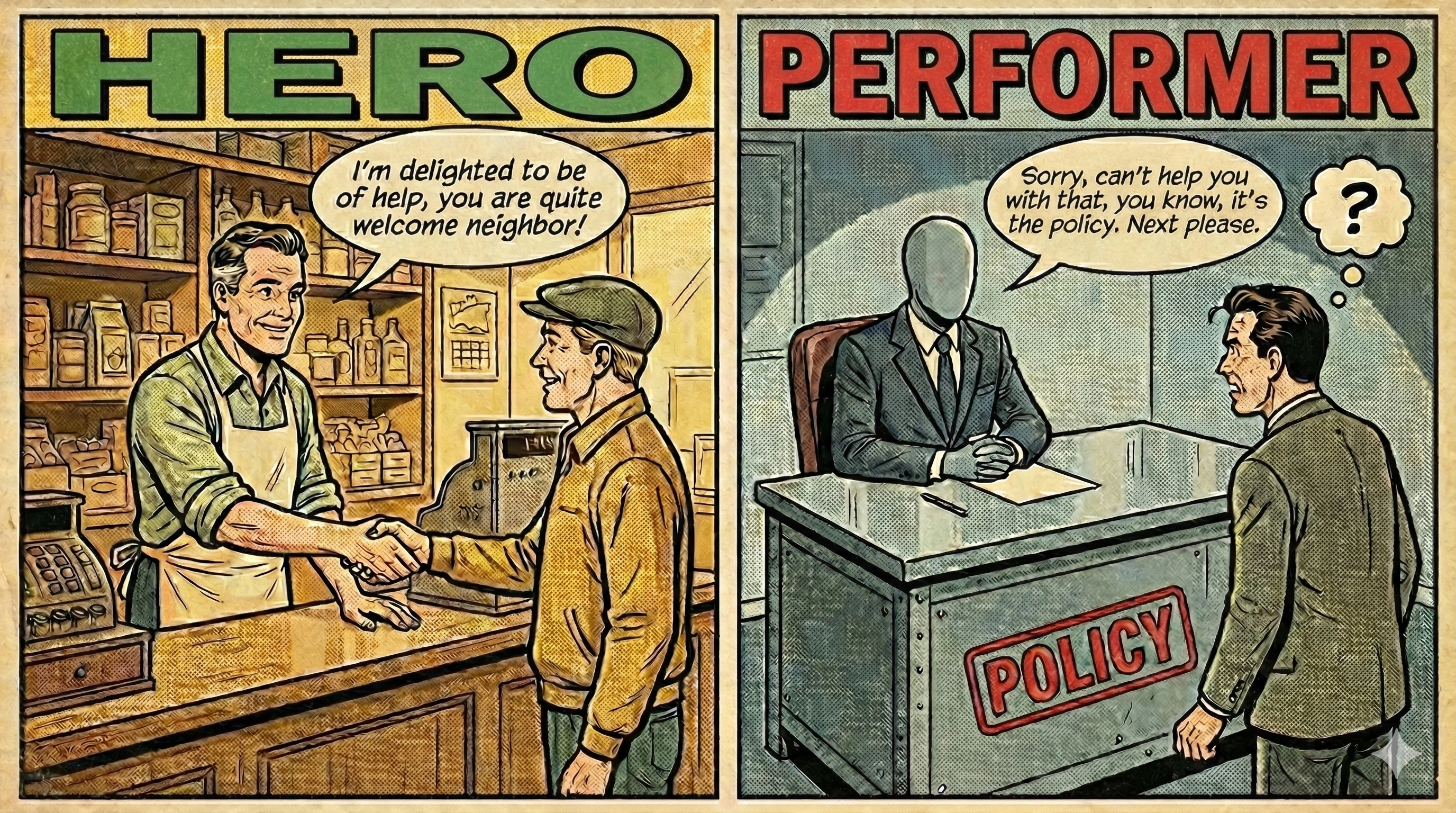
| Dimension | Performer (Spence) | Hero (Chandra) |
|---|---|---|
| Time from problem to action | 8 months of minimizing | 3 weeks to full reversal |
| Response to feedback | "App is great, I use it daily" | "The outcome did not meet our expectations" |
| What changed | Nothing (until forced out) | Full policy reversal + rebates |
| Who absorbed the cost | Customers (broken systems for months) | Company (returned fees, paid rebates) |
| Outcome | CEO forced to resign | Community trust restored |
| Mind filled with | Protecting the narrative | What's happening to my sellers |
THE LESSON
Both companies made decisions that hurt their customers. That happens. Products fail. Policies backfire. The question is: what fills your mind when you learn you have caused harm?
Spence's mind was filled with the story he wanted to tell. The app was great. He used it daily. The problems were being addressed. For eight months, he defended a narrative that his customers could see was false every time they tried to use their speakers.
Chandra's mind was filled with his sellers. When he saw them losing money—despite the fee reduction he had promised would help them—he did not double down. He did not wait for the data to look better. He reversed course within three weeks and paid rebates to those who had already been hurt.
Here's the uncomfortable truth: reversing course feels like failure. Admitting you were wrong feels like weakness. The performer's instinct is to defend, to explain, to wait it out.
But the hero knows something the performer does not: speed of response often matters more than the mistake itself.
Three weeks of pain followed by reversal creates a story of listening and agility.
Eight months of denial followed by resignation creates a story of arrogance and betrayal.
"When it all works, it's absolute magic," Conrad said about Sonos. "It's also true that when it doesn't work, our customers are taken out of the moment and are right to feel that we've let them down."
"Our customers are right to feel that we've let them down."
That's the sentence Spence never said. That's the truth he spent eight months avoiding. And in the end, it cost him his job, his reputation, and $20-30 million of his company's money.
Chandra said it in three weeks. His company is stronger for it.
The hero does not ask "How do I protect my story?" The hero asks "What do my people need to hear right now?"